The Garage Re-Set: From Storage Pit to a Room You'd Actually Use
Dust, heat, and a decade of half-used paint cans are what stand between you and a garage that earns its square footage. Here is how to take it back.
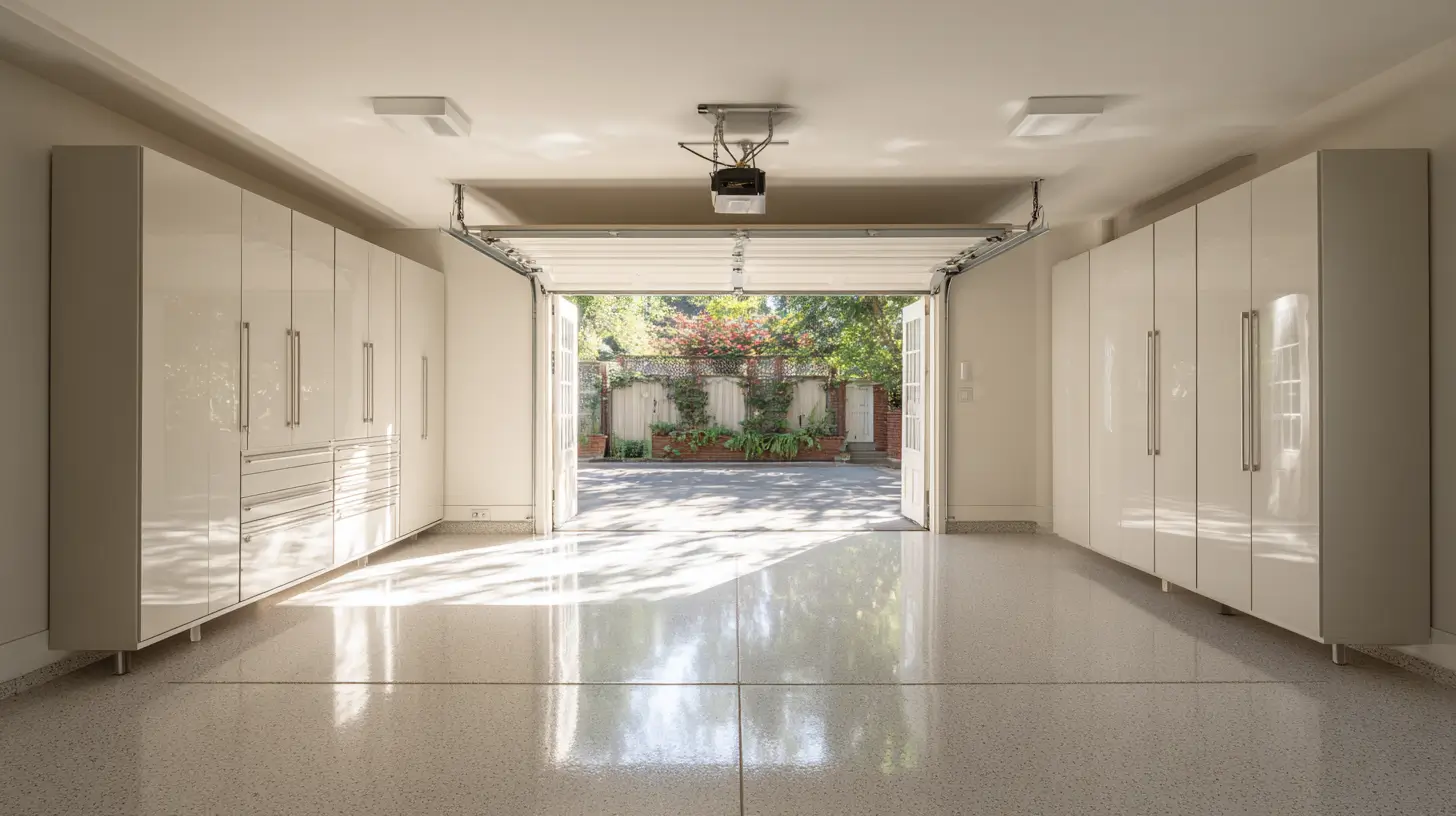
The two-car garage is often the most valuable underused room in an 805 home. It is also the dustiest and the hottest space on the property. Win on those two fronts — dust and heat — and the organization part becomes almost easy.
Block out a weekend, pull everything onto the driveway, and sort ruthlessly into keep, donate, and dispose before a single new shelf goes up. You cannot design a room around clutter you are unwilling to let go of. And if a sale is on the horizon, that same ruthless purge is the first move in staging the home to sell.
Win the dust war first
Garage dust has three main sources: the concrete slab itself, which slowly sheds a fine powder; the gaps around the garage door, which let in wind-blown grit and leaves; and ordinary road and brake dust from the cars. Attack all three. Sealing the slab with a penetrating concrete sealer — or coating it with epoxy — stops the floor from dusting and makes it wipeable. Replace the rubber bottom seal on the door and add weatherstripping around the perimeter to keep Santa Ana grit and debris out.
Then get storage off the floor. Dust has fewer places to settle, and you can actually sweep when the perimeter is clear.
- Seal or coat the slab to stop concrete dusting.
- Replace the door bottom seal and weatherstrip the perimeter.
- Choose closed bins over open boxes so contents stay clean.
- Clear the floor so the space can be swept.
Tame the heat
An uninsulated SoCal garage bakes, especially if it shares a wall with the attic or faces west. That heat quietly ruins paint, batteries, electronics, wine, and pantry overflow, and it makes the room miserable to use half the year. Insulate the garage door with a retrofit kit, insulate any shared walls or ceiling, and add a radiant barrier if the garage shares the attic. Improve airflow with a gable or exhaust fan, or even a simple through-wall vent, to let the hottest air escape.
One rule worth following: do not store temperature-sensitive items in an unconditioned garage. If you want to keep wine, electronics, or chemicals out there, you need to actually moderate the temperature first.
- Insulate the door and any attic-adjacent surfaces.
- Add a radiant barrier where the garage shares the attic.
- Vent the heat with a gable or exhaust fan.
- Relocate heat-sensitive items until the space is conditioned.
Build vertical, and zone by use
The floor is for parking and for things with wheels; almost everything else belongs on the walls or overhead. A wall system — slatwall, pegboard, or a French-cleat wall — keeps tools and gear visible and reconfigurable, while overhead racks swallow seasonal bins. Group your storage into clear zones: tools, sports and outdoor, garden and fire-season gear, and household overflow. Clear, labeled bins beat opaque boxes every time, because you only put back what you can find.
- Install a wall system for tools and frequently used gear.
- Add overhead racks for seasonal storage.
- Use labeled, clear bins grouped by zone.
Finish it like a room
The difference between a storage pit and a usable room is often just light and a surface. Good LED shop lights transform the space; a real workbench (or a fold-down one) gives you a reason to be out there; and a finished floor — epoxy or interlocking tiles — makes it feel intentional. With those three pieces in place, the garage can moonlight as a gym, a workshop, or a hobby room.
Keep it from sliding back
The hard work is the seal-cool-and-lift sequence; do that once and the room mostly maintains itself. From there, a ten-minute monthly reset — sweep, return strays to their zones, break down boxes — is enough to keep the slide from ever starting again.